The Rise of Agentic AI Systems in 2026: How Autonomous Co-workers Are Redefining Productivity


For the past few years, the entire world has been experimenting with basic generative AI tools. We used them to write quick emails, generate stock images, and summarize lengthy PDF documents. However, as we move through 2026, a massive structural shift is taking place. Artificial intelligence is evolving from a passive assistant that answers questions into an active, independent partner.
Welcome to the era of Agentic AI Systems.

This isn’t just another tech buzzword. Major global industries, software platforms, and remote work ecosystems are completely rebuilding their foundations around autonomous AI coworkers. If you want your business or career to stay relevant, understanding how these digital systems operate is no longer optional.
What Exactly Are Agentic AI Systems?
Unlike traditional chatbots that simply respond to a prompt and wait for your next command, an Agentic AI system is built to perceive, plan, reason, and execute complex workflows entirely on its own. You don’t give it a line of text to write; you give it an ultimate goal.
Traditional AI: “Write a summary of this financial data.”
Agentic AI: “Review this data, find market anomalies, draft a compliance report, and email it to the accounting team via API.”*
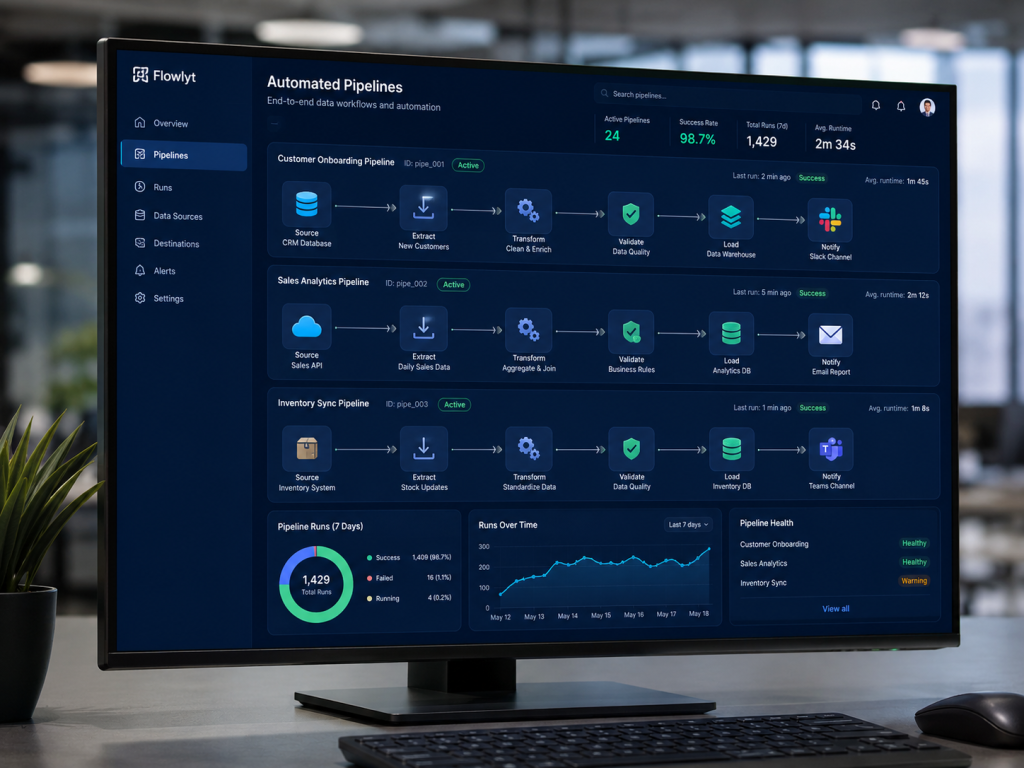
Instead of waiting for a human to manage every micro-step, agentic platforms break down massive goals into actionable sub-tasks. They can navigate software tools, connect to third-party APIs, cross-verify information with other AI agents, and dynamically fix their own errors if something goes wrong.

Why Agentic AI is the Definitive Trend of 2026
The reason this technology has reached an inflection point is practical necessity. According to industry tracking data, organizations are transitioning away from fragmented pilot projects into real-world, scalable deployments.
Recent global tech industry surveys reveal that 71% of network and system operators have prioritized or already deployed agentic workflows. Furthermore, corporate infrastructure reports indicate that 2026 is widely recognized as the “Year of Truth for AI,” where tech must deliver measurable financial value and structural efficiency rather than just novelty chat boxes.
Traditional Chatbots vs. Agentic Workforces
| Operational Feature | Legacy Generative AI (Chatbots) | Next-Gen Agentic AI Systems (2026) |
| Dependency | High; requires prompt-by-prompt human inputs. | Low; functions autonomously based on macro goals. |
| Workflow Scope | Handles single isolated tasks. | Orchestrates complex multi-step processes across systems. |
| Tool Integration | Limited to the browser chat window. | Deeply connected to internal databases, tools, and APIs. |
| Error Handling | Hallucinates or stops when a bug occurs. | Self-correcting and capable of learning from obstacles. |
Real-World Applications: How Industries Are Adapting
Agentic AI systems aren’t just living in deep research labs; they are actively reshaping day-to-day employment and operational structures globally:
1. The Autonomous Software Engineering Revolution
The field of software engineering is undergoing an absolute transformation. Developers no longer spend hours typing repetitive lines of backend logic; instead, they express clear human intent, and advanced AI systems assemble, test, and deploy the application autonomously. Indie creators are building complex software architectures in a matter of hours using natural language prompts.
2. Intelligent Enterprise Operations
In logistics, customer service, and corporate administration, businesses are utilizing multi-agent ecosystems. For example, a customer service agent can handle a complicated refund request, communicate with a separate inventory database agent to confirm warehouse stocks, and automatically update a shipping tracking link without a single human intervention.
The Human-AI Alliance: Shifting Careers, Not Eliminating Them
A common fear circulating on social media is that Agentic AI systems in 2026 will completely replace human workers. However, data from global employment platforms shows that the trend points toward augmentation rather than replacement.
Uniquely human “soft skills”—such as critical thinking, strategic planning, creative direction, and empathetic communication—are seeing a massive surge in market demand. Professionals who master “orchestration”—the ability to direct, govern, and supervise collections of AI agents—are becoming the highest-paid individuals in the digital economy.
Instead of writing data extraction scripts or doing data entry, human workers are assuming managerial control over digital co-workers. It allows small, three-person startups to execute global marketing and operations campaigns that used to require a multi-million dollar corporate budget.
Summary and Next Steps
The evolution toward autonomous digital systems represents the most significant paradigm shift since the birth of the internet. Agentic AI systems are fundamentally proving that true technological value lies in outcomes, execution, and real-world reliability.
Are you currently using any autonomous tools in your daily workflow? How do you see these changes impacting your specific career field? Share your insights and experiences in the comment section below!